
Home Management Binder Printables
I’ve been making home management printables for over 14 years now, so I guess you could say I know a little something about home management binders. From the preschool years through middle and high school, and now with kids all grown up, I’ve had some version of one in my home for even longer than I’ve been making printables for it.
A home management binder is a great way to keep track of everything you need to keep home and family life running smoothly. Think of it as part of your home management system — a hub of information about your home that anyone in the household can access. Whether someone needs to look up a service company’s contact info, check the instructions for cleaning the cast iron pans, or see what maintenance tasks are coming up, this is the place everyone turns.
Even if a full binder isn’t your thing, you might still find a few of these printables useful on their own.
I like to think of my home management binder as my home’s user manual, part how-to, part reference. It’s not something I look at every single day, but it’s still an important part of how I keep our home running.
If you’d like to know more about what a home management binder actually is and what purpose it serves, check out this post:
▷ What is the Purpose of a Home Management Binder
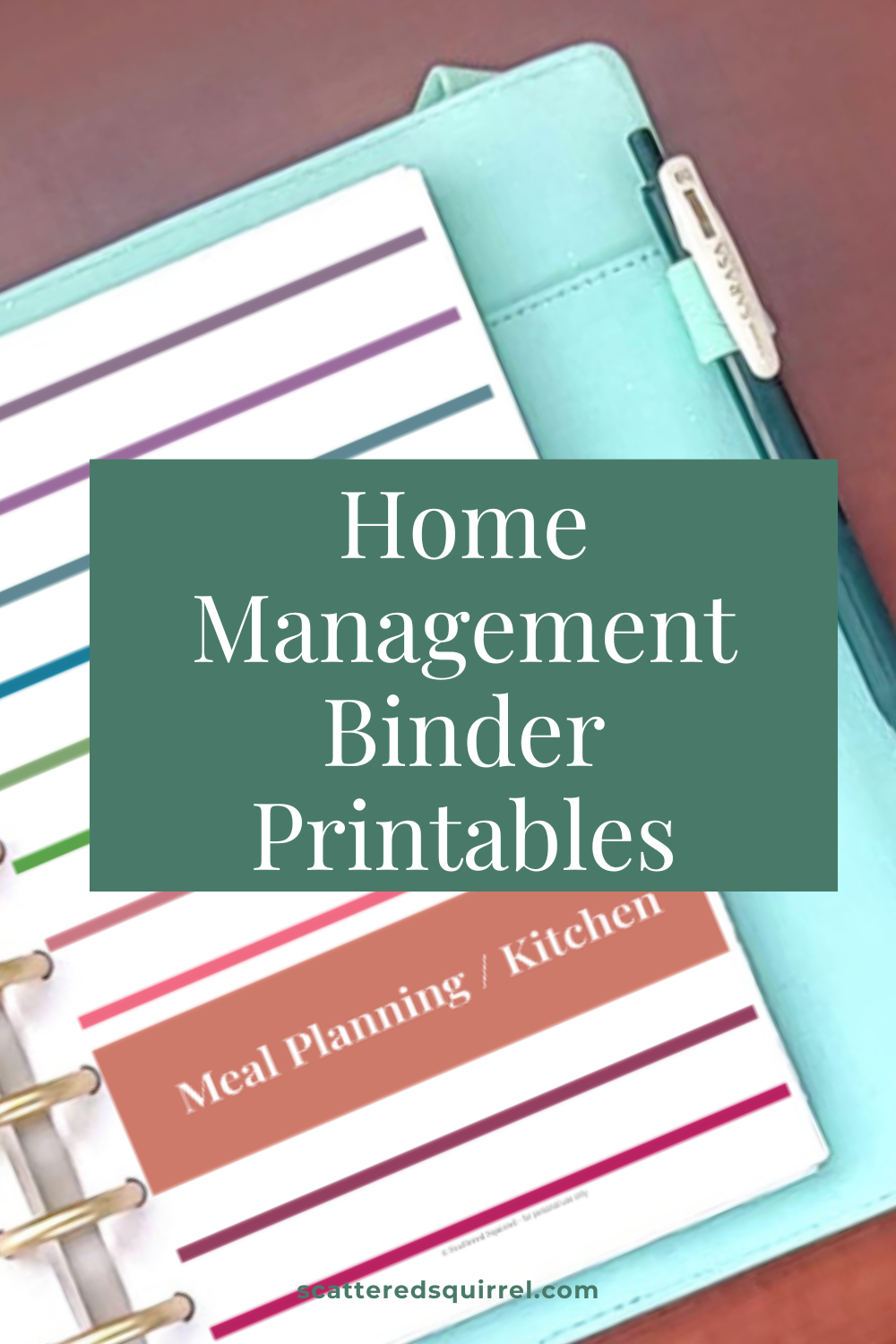
Making a Home Management Binder
When it comes to managing a home, there’s a lot to plan and keep track of.
Things like:
- home cleaning routines
- important information and emergency contacts
- budgeting, finances, and bills
- home-related accounts
- school information for kids
- addresses and contact information for friends and family
- seasonal home maintenance
And really, this list could go on and on. Every home and every family has different needs, which is exactly why a home management binder works so well. You build it around your life, not someone else’s template.
Getting started is easier than it sounds. Decide what information you want to store, grab a three-ring binder and a pack of dividers, and you’re most of the way there. You can always add or remove sections as your needs change over time.
When it comes to figuring out what to put in it, I find it helps to think of your binder as two things at once: part reference book, part planner and tracker. Need information about your home or family? This is the book you grab. Want to check off cleaning tasks or track maintenance? This is also the book you turn to.
▷ Not sure what kind of binder or planner to start with? This post can help.
I’ve organized all the home management printables below into sections to make browsing easier. Keep scrolling, or use the Table of Contents to jump straight to the section you need.
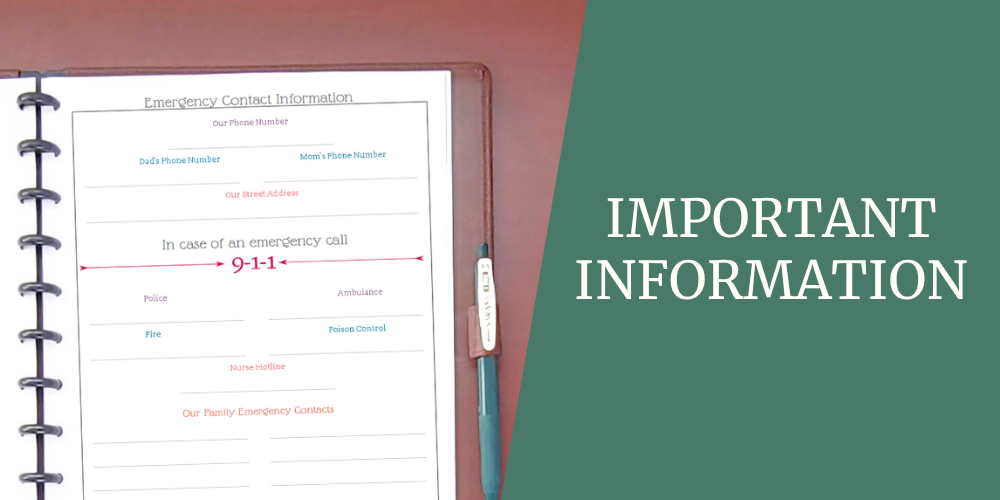
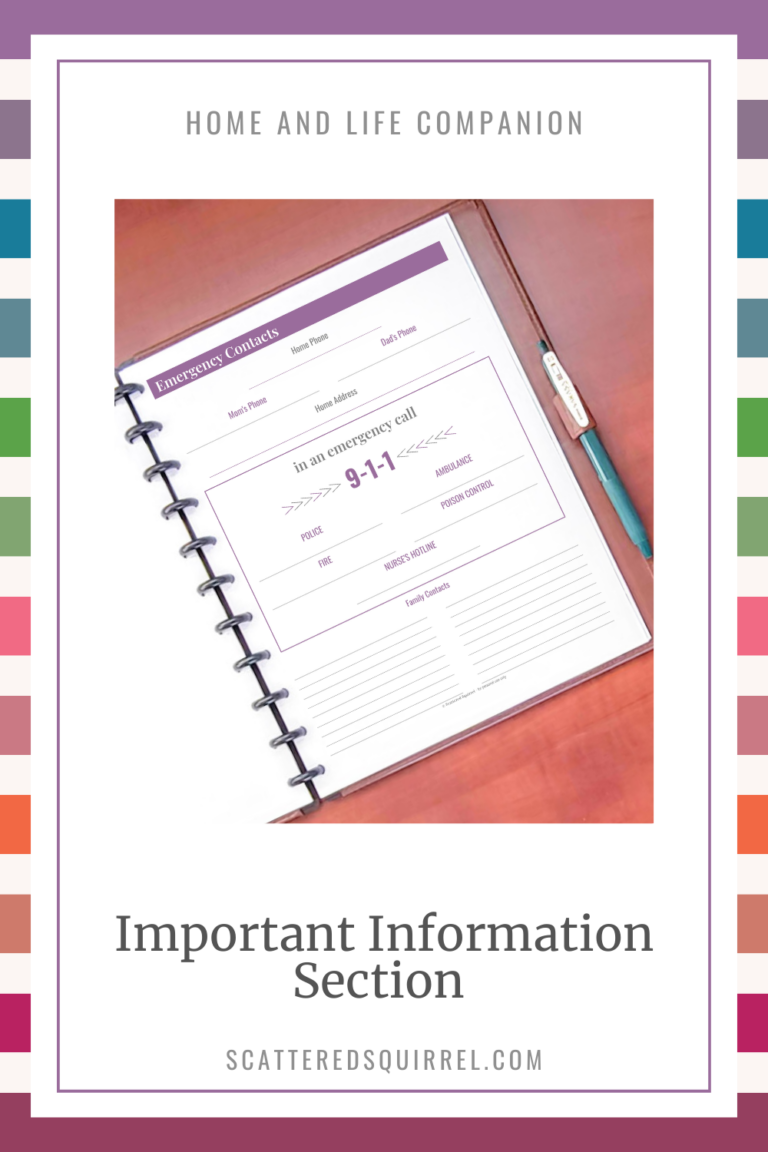
Important Information Section
Whether you own your home or rent, having certain key information in one central place is genuinely useful , especially in those moments when you need it fast. It makes it easy for you, your partner, or anyone else in the household to find what they need without having to search for it.
Things like:
- emergency contact phone numbers
- mortgage broker or landlord contact info
- plumber, electrician, and other service company numbers
- doctor, dentist, and other medical contacts
- important accounts and login details
- address lists
- a password keeper
I know most people store address books and passwords on their devices now, but there’s something to be said for having a hard copy, especially if your binder doubles as a reference for emergency situations when phones are dead or unavailable.
The front of every home management binder I’ve ever had starts with an Emergency Contacts page. When my boys were younger, I’d print a few extra copies and hang them in the kitchen and upstairs hallway so they could always find them if they needed to. It’s one of those small things that brings a lot of peace of mind.
You can find printables to help you set up this section in the posts below.
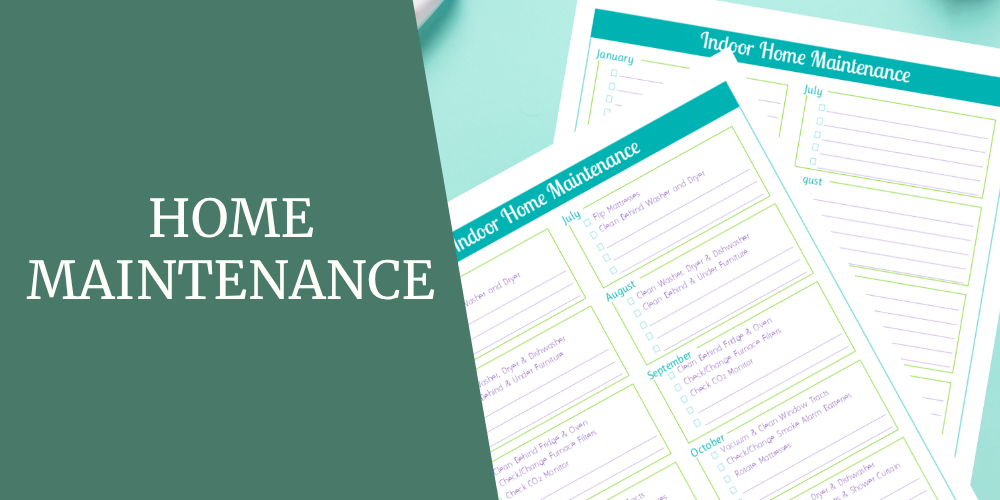
Home Maintenance Section
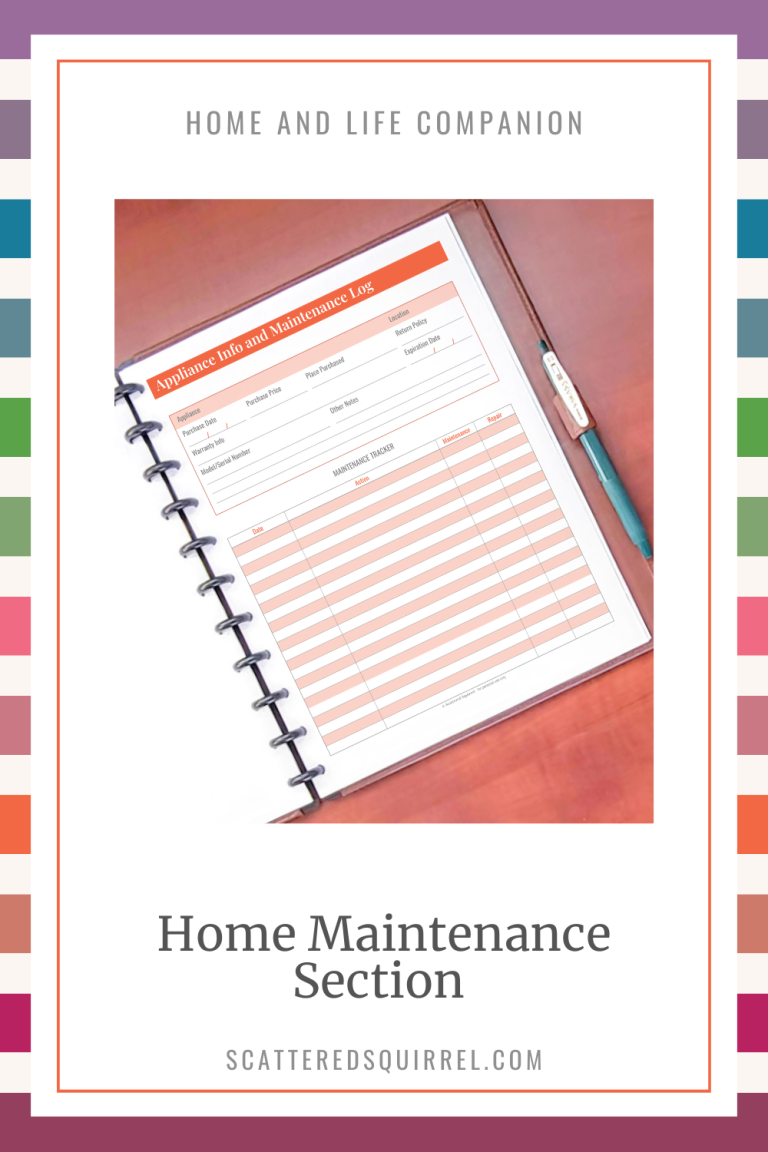
I keep all my home maintenance lists in my home management binder, and this section is one I actually use on a regular basis. When I sit down to do my monthly planning, I flip to this section to see if there are any maintenance tasks I should add to my to-do list for that month.
I keep home maintenance and home cleaning in separate sections because they really are different things. Cleaning is a daily thing. Maintenance is about keeping the house itself in good shape and preparing for changing seasons.
Some examples of maintenance tasks that might be on your list:
- checking and replacing smoke alarm batteries
- changing furnace filters
- cleaning gutters
- winterizing outdoor hoses and faucets
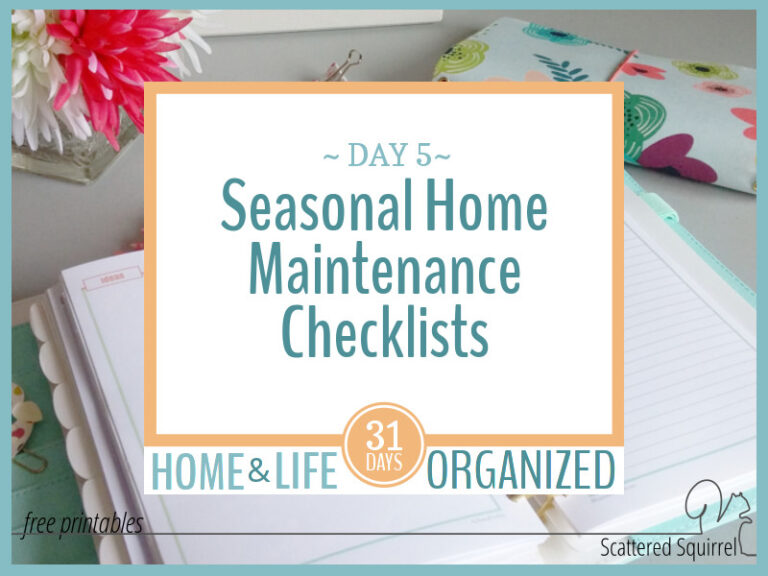
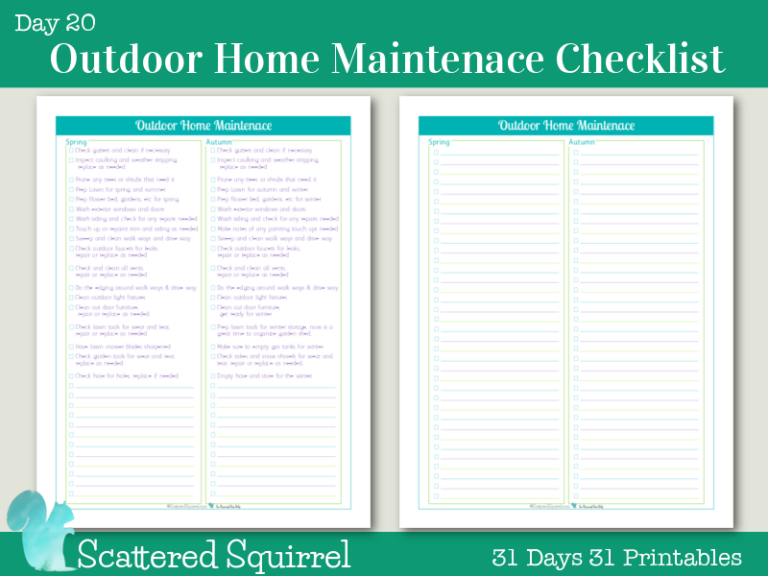
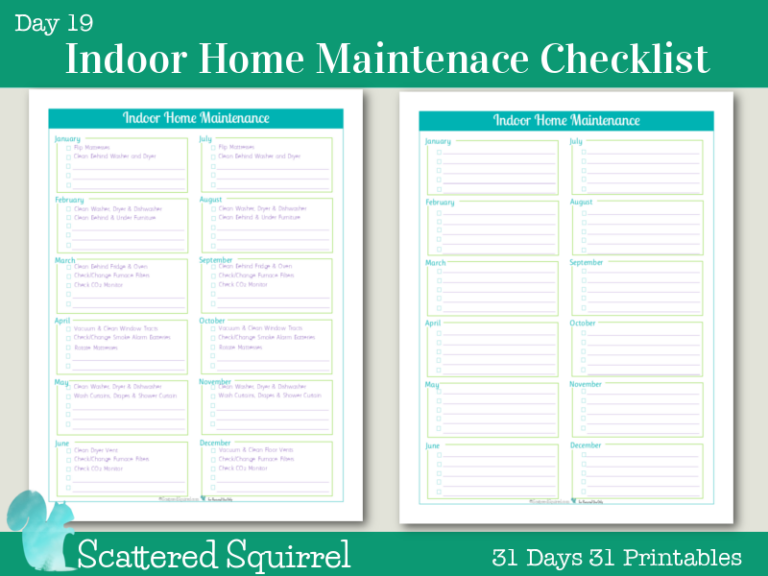
I’ve organized the printables into Indoor and Outdoor task lists, because not everything applies to every home. If neither list quite fits your situation, you can always use them as a starting point and create your own version.
My recommendation? Start with the Seasonal Home Maintenance Checklists post and grab both the Indoor and Outdoor lists. Work through them, skip anything that doesn’t apply, and you’ll have a solid maintenance plan in no time.

Home Cleaning Section
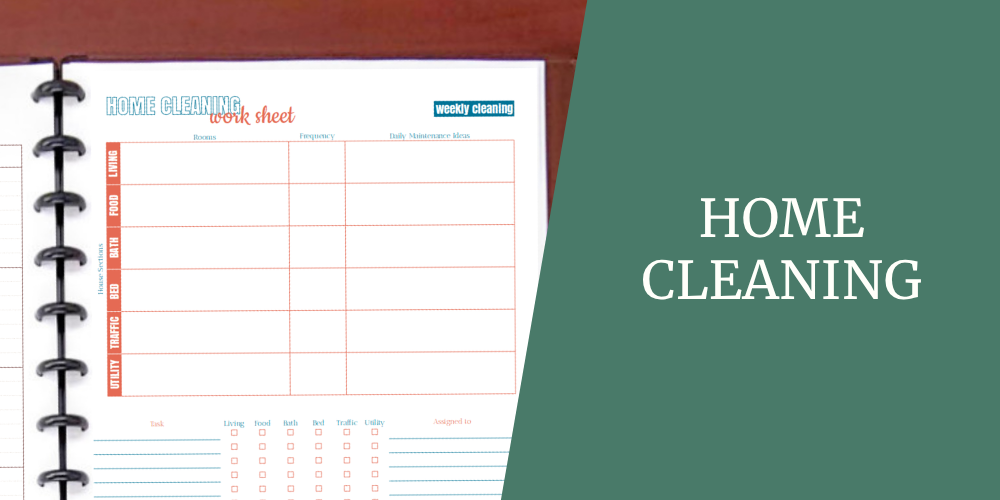
Cleaning and I used to have a very on-again, off-again relationship. I’d clean in fits and starts, and finding a system that actually worked for me seemed impossible . A lot of the checklists and schedules in this section were created during that time. They were my own trial-and-error attempts to figure out what would stick.
Cleaning can easily feel like it takes up the lion’s share of home management, and unlike seasonal maintenance, it’s not a once-a-year thing. But creating a routine that works for your home and your family can go a long way toward making it feel less like a mountain and more like just part of your daily flow. It takes some time, and a willingness to tweak things as you go, but once you find the right rhythm, it gets a lot easier.
If you’re in that “trying to figure it out” stage, I’d suggest starting with your daily and weekly cleaning tasks first. Get those feeling manageable before you worry about anything else.
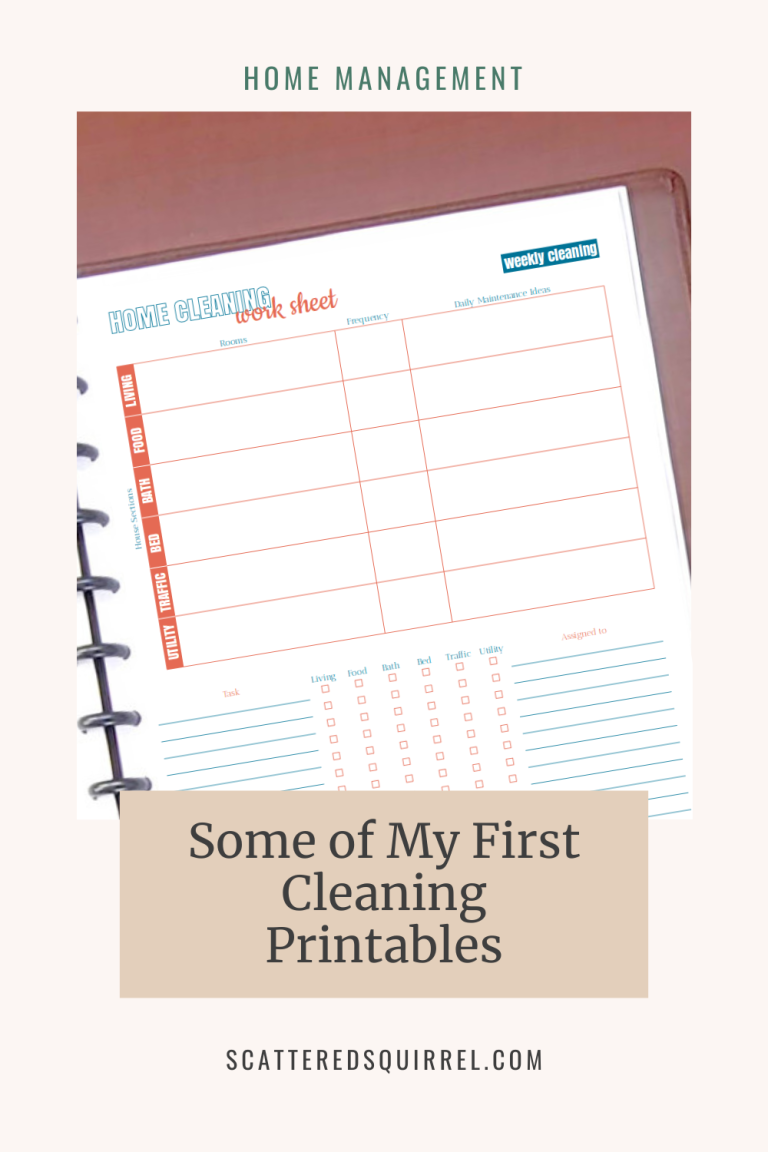


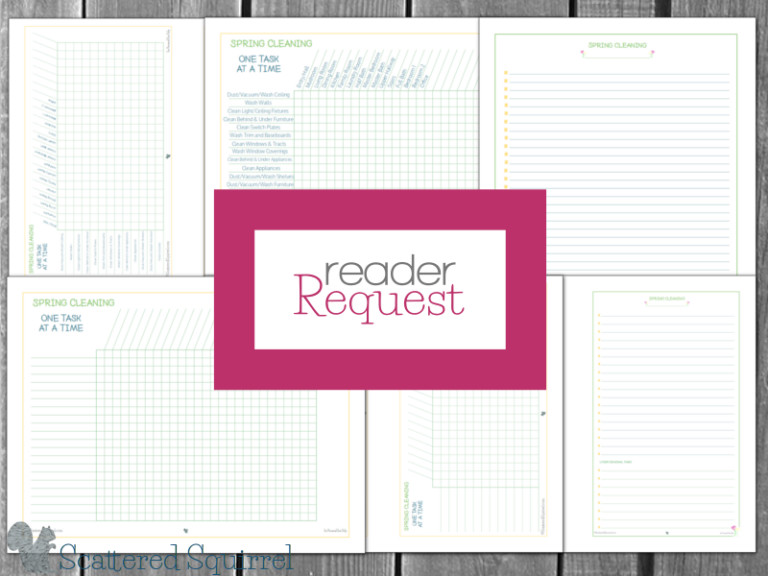
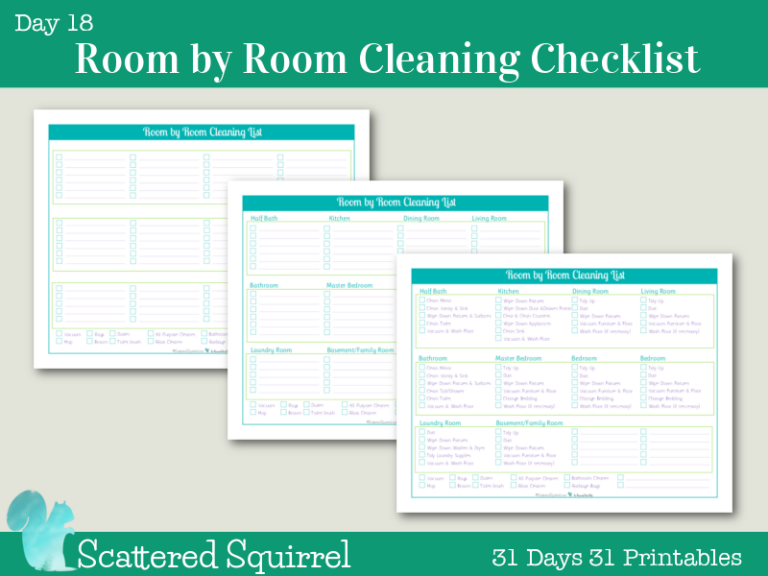


▷ Check out the Home Cleaning page for more tips on building a cleaning routine that works for you.
Seasonal Cleaning Section
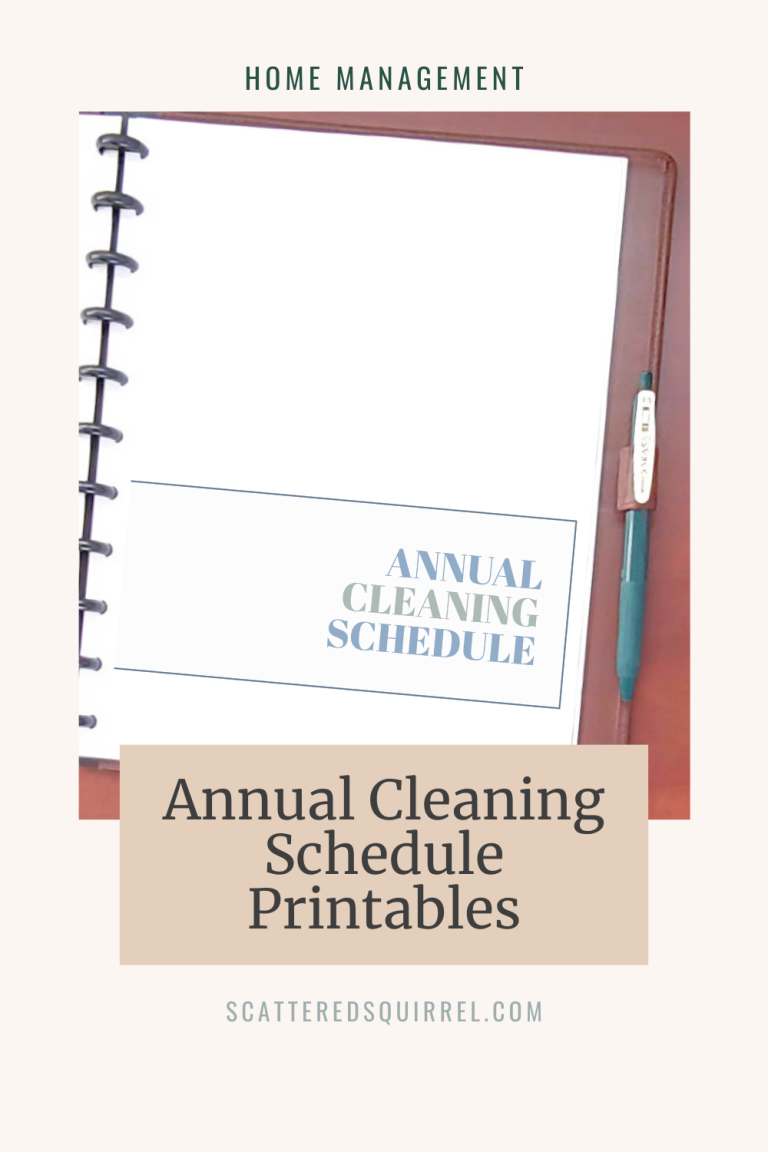
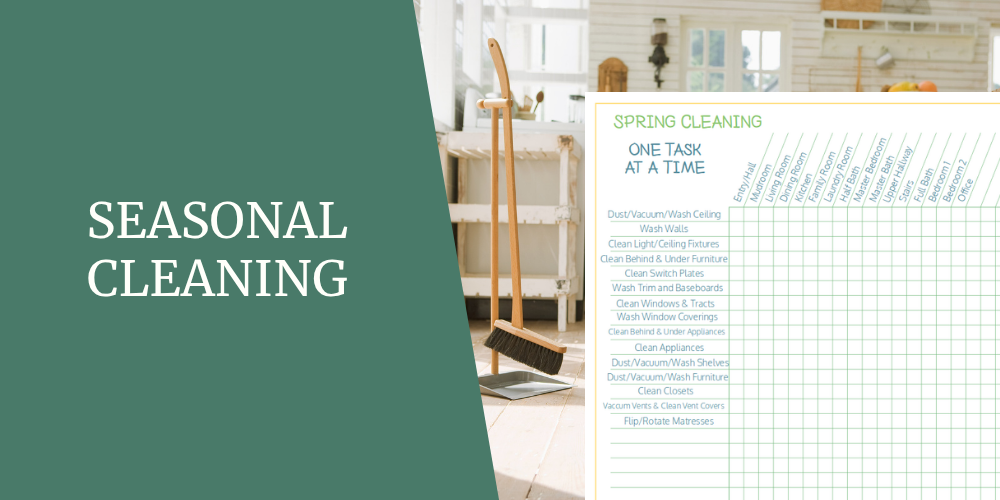
Some people spring clean and others don’t. Honestly, both approaches are completely valid. At its core, seasonal cleaning is just about tackling those tasks that don’t make it onto your regular cleaning schedule.
Things like:
- cleaning light fixtures
- washing walls
- getting carpets professionally cleaned (at least once a year is a good rule of thumb)
- cleaning behind appliances
- clearing out the dryer vent
- washing vent covers
- cleaning the tops of kitchen cabinets
Whether you go all-in or just want to knock out a few tasks, there’s something in the posts below that will fit your approach.
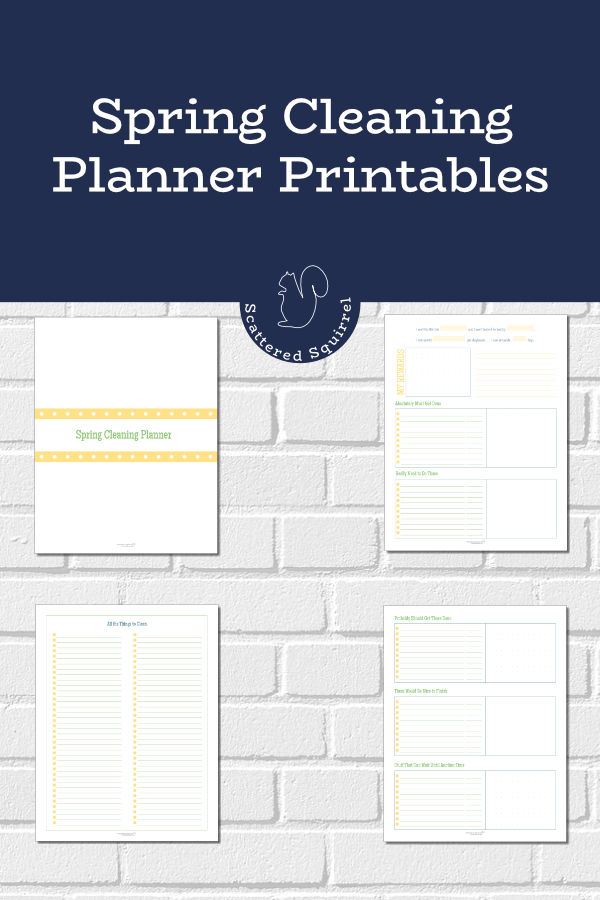
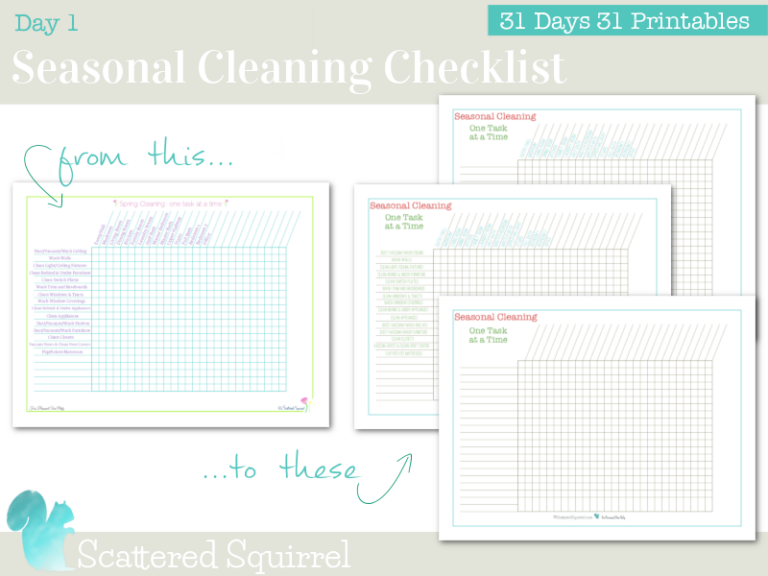
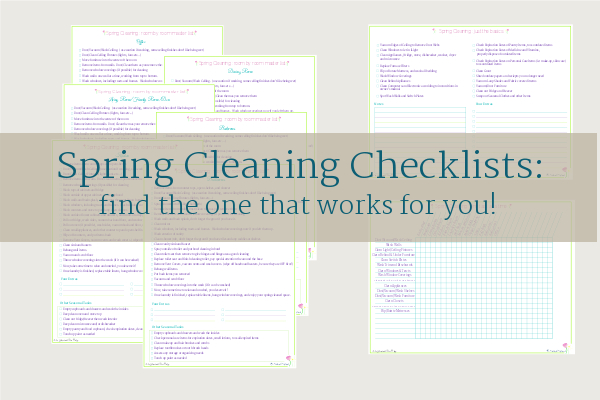
And if the idea of seasonal cleaning feels overwhelming before you even start, the Just the Basics printable is exactly what it sounds like. It’s a simple, straightforward list you can realistically get through in a weekend or two.
Finance Section
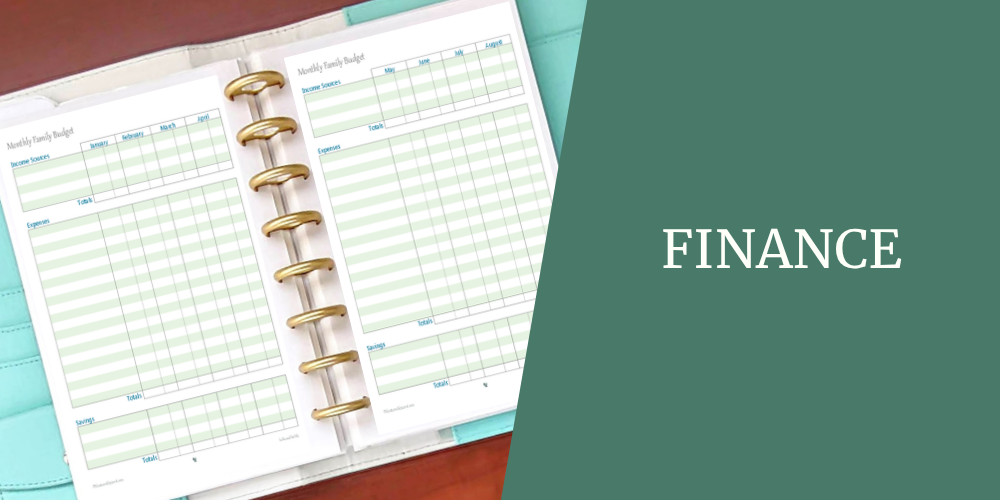
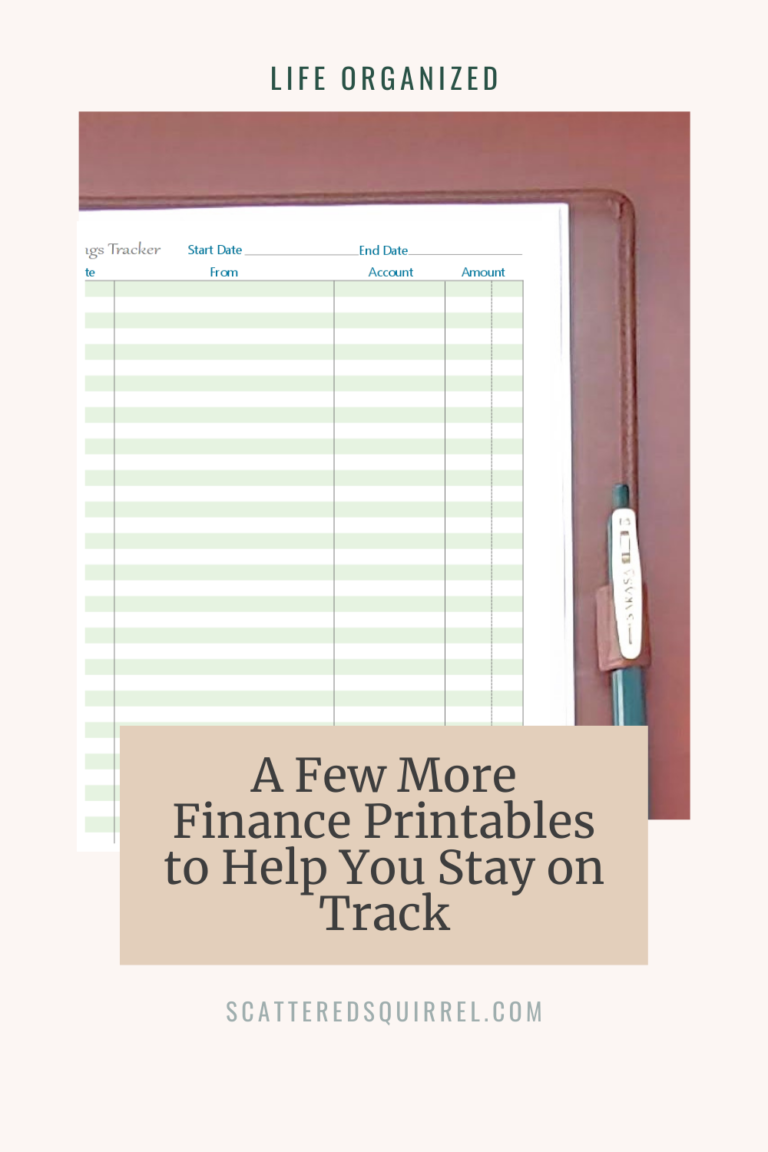
Back in 2012 when I first created this page, the options for tracking finances digitally were a lot more limited than they are today, which is a big part of why I made these printables in the first place.
In the interest of full transparency: my family doesn’t use most of these anymore. We do the majority of our financial tracking online, mostly because my husband’s work has him away from home regularly, and it’s just easier for us to have everything accessible digitally.
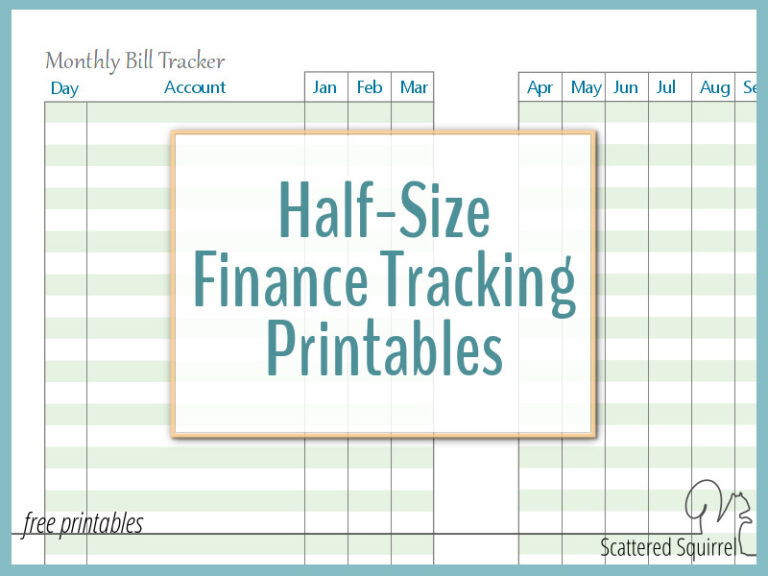
That said, the one I still use to this day is the monthly bill tracker. I love being able to see at a glance what’s been paid and what’s still coming up. It’s a simple way to make sure nothing slips through the cracks.
For anyone who prefers pen and paper, or just wants a hard copy of their financial information, the printables in the posts below are a great option.

Family Information Section
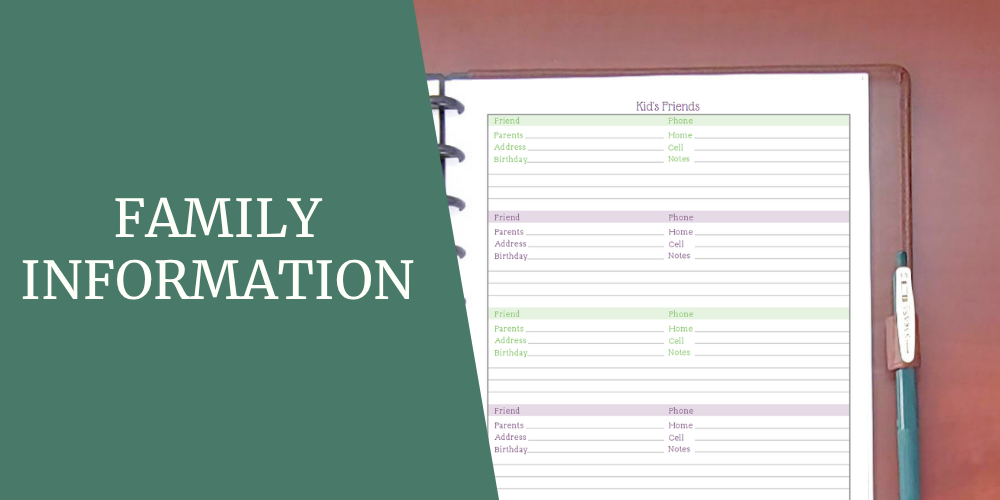
This was one of my favourite sections when my boys were growing up. It’s where I kept all our ideas for family time such as planning movie nights, weekend activities, day trips, you name it.
The family activities directory printable came in especially handy both times we moved. Being able to sit down and map out what attractions and events were in our new area helped us feel at home much faster and gave us things to look forward to.
Family Fun
If I were building a Family Fun section from scratch today, I’d start with the printables in the Fun with the Family post. It has everything you need to get that section up and running.
Kids’ Stuff
If you have kids, having a central place for the information you reach for most — friends’ contact info, school details, important dates — is genuinely a sanity-saver.
My favourite printable in this section has always been the Friends Address List. Being able to note parents’ names, birthdays, food allergies, favourite colours and having all of that in one spot was such a help, especially during the years when there always seemed to be a birthday party on the calendar.
It also makes it easier for your partner or your kids themselves to find what they need without having to track you down first.
If you’re only going to use one printable from this section, I’d make it the Kid Friends Address List. It earns its spot every time.


Meal Planning Section
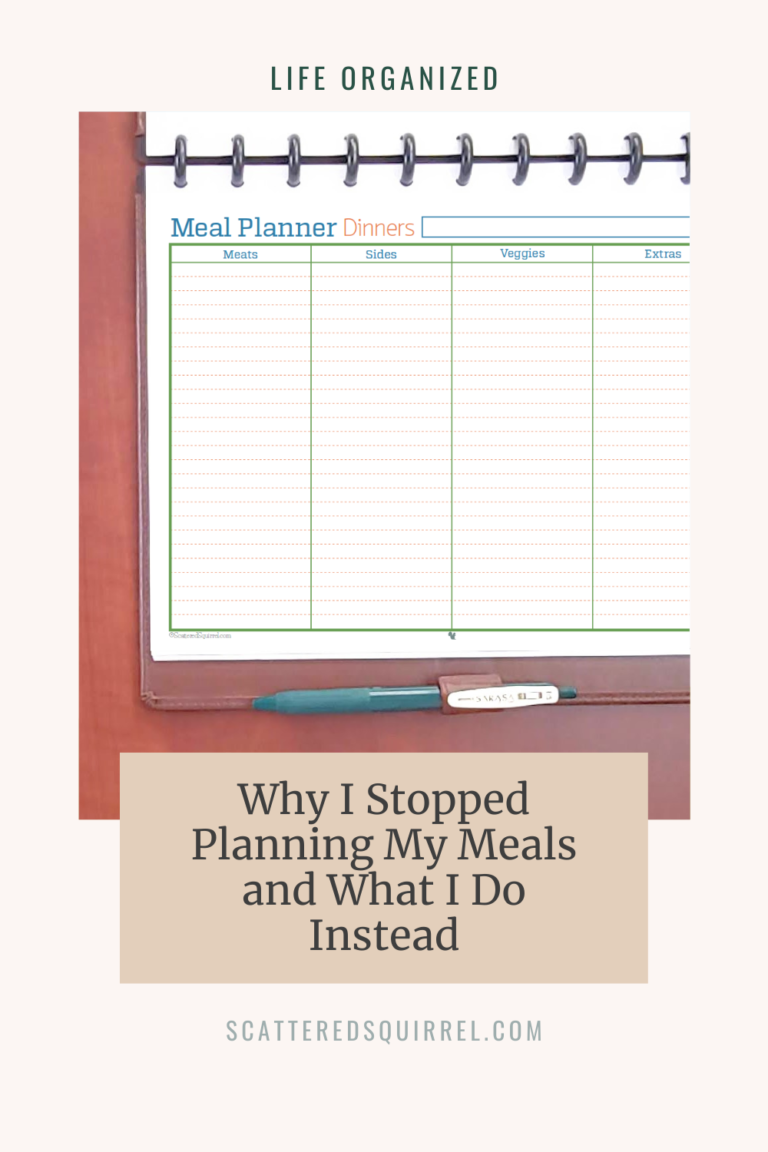
A few years ago I stopped planning meals in the traditional sense, so my home management binder no longer has a dedicated meal planning section. I keep all that in a separate binder in the kitchen now. But for a long time, my HMB had a whole section devoted to it — recipes, meal plans, the works — and it worked really well.
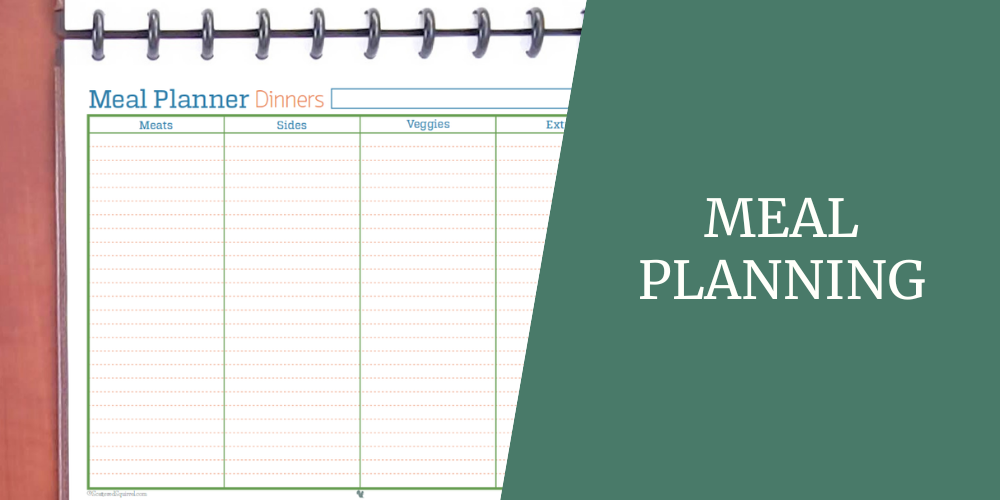
Just because I’ve moved away from traditional meal planning doesn’t mean I think it’s not worth doing. The benefits are real: it reduces the mental load, helps you buy only what you’ll actually use, and saves money. If it’s something you’re working on, it absolutely deserves a spot in your binder.
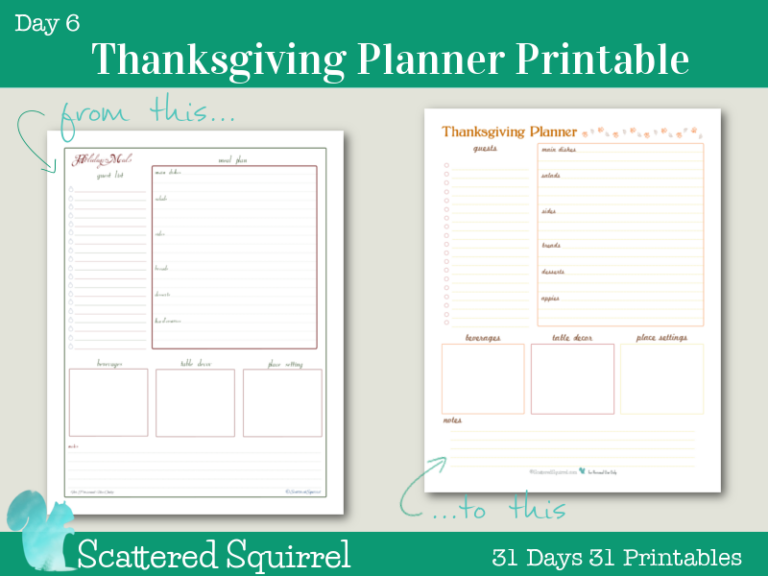
I have a whole page dedicated to meal planning and the printables that go with it, but you’ll also find everything here in the posts below.
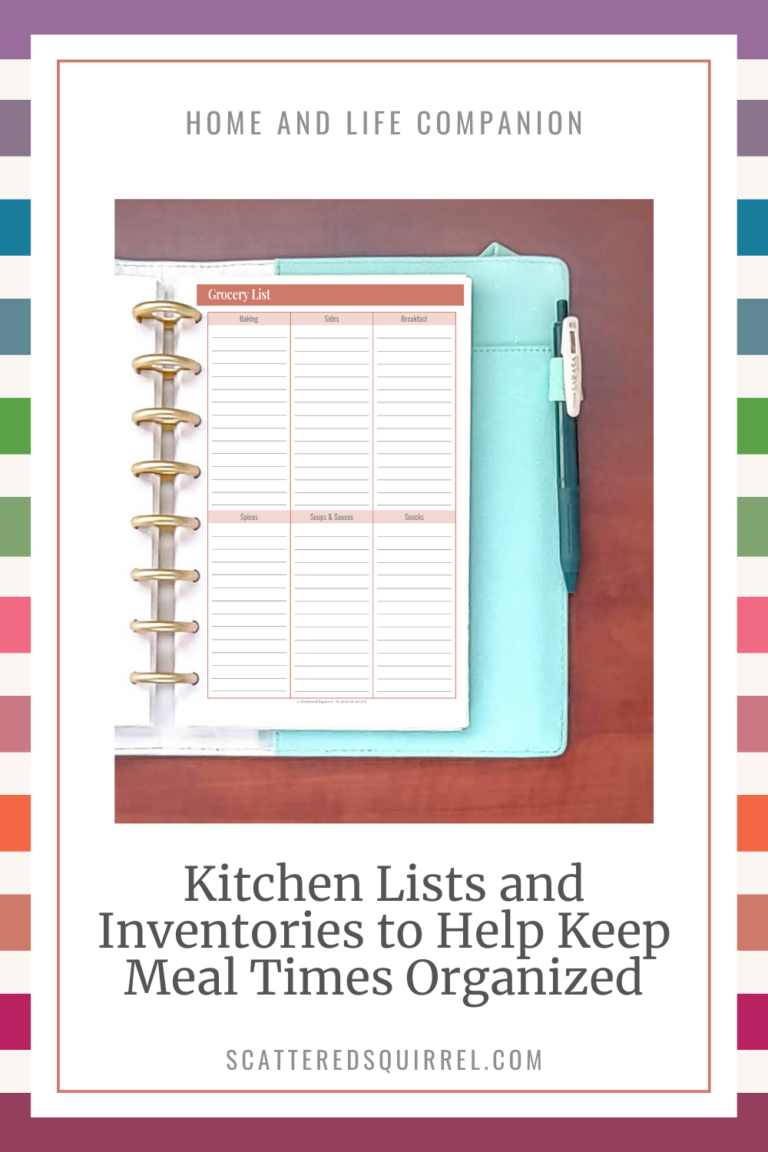
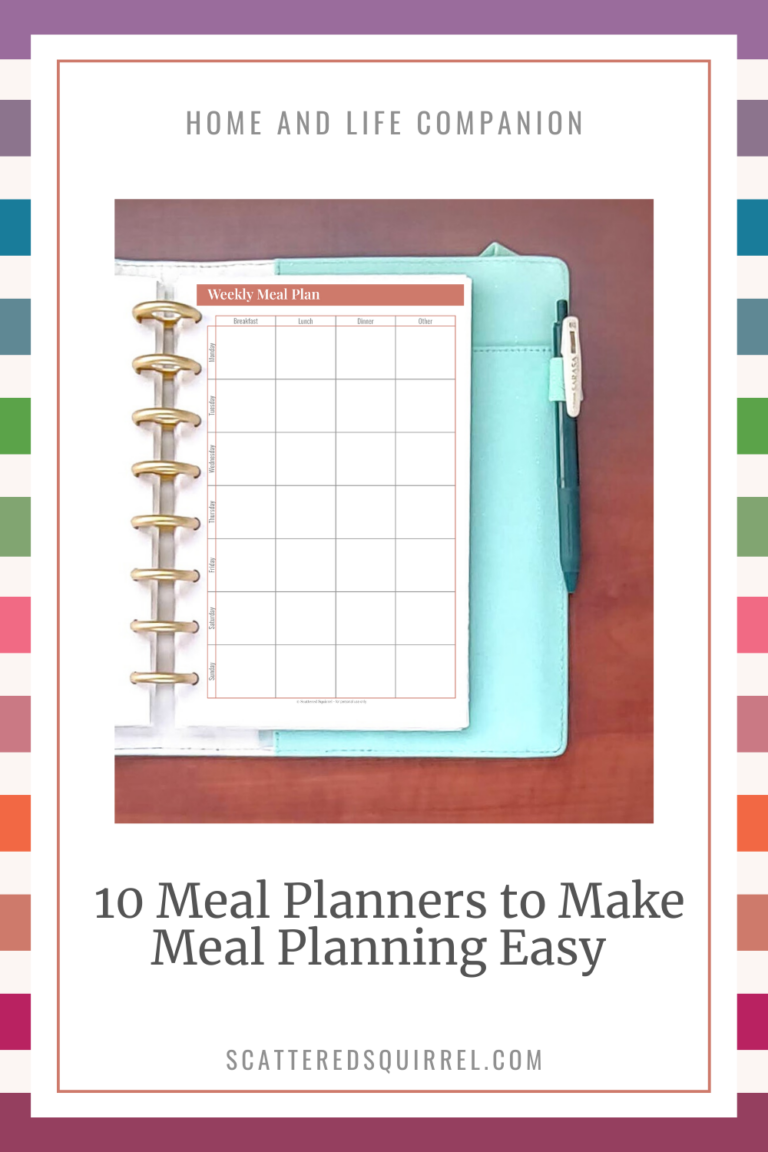
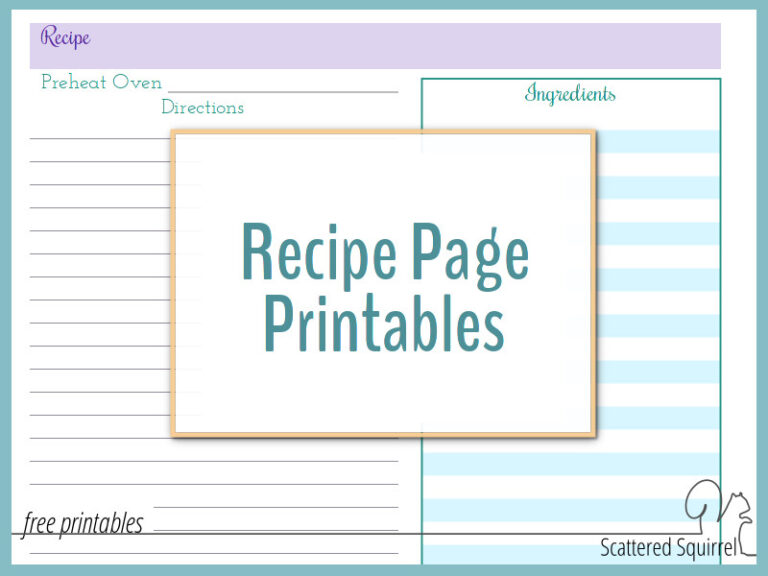
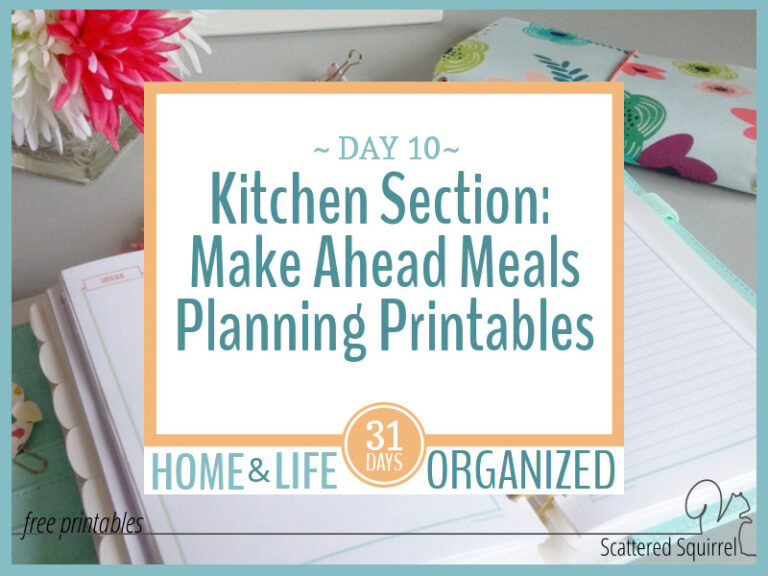


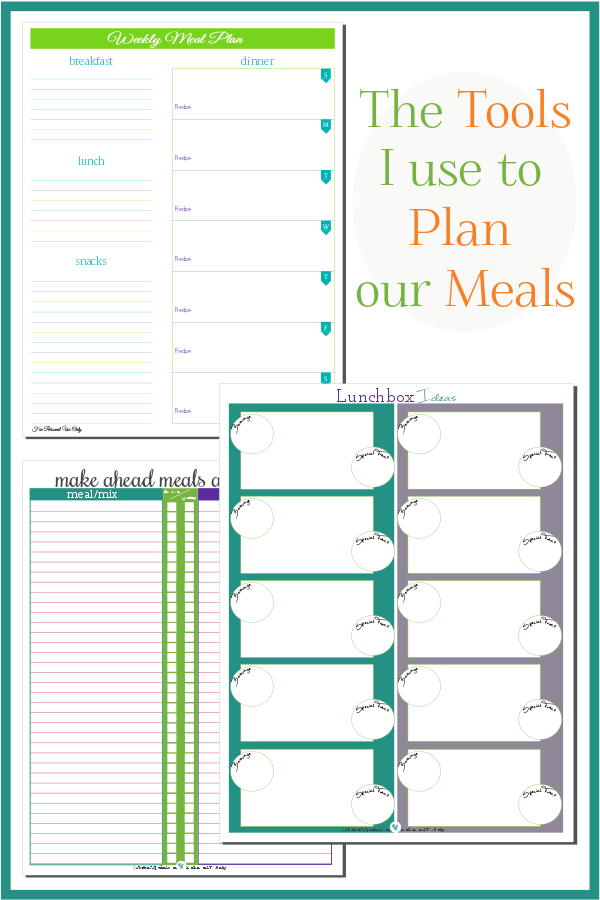

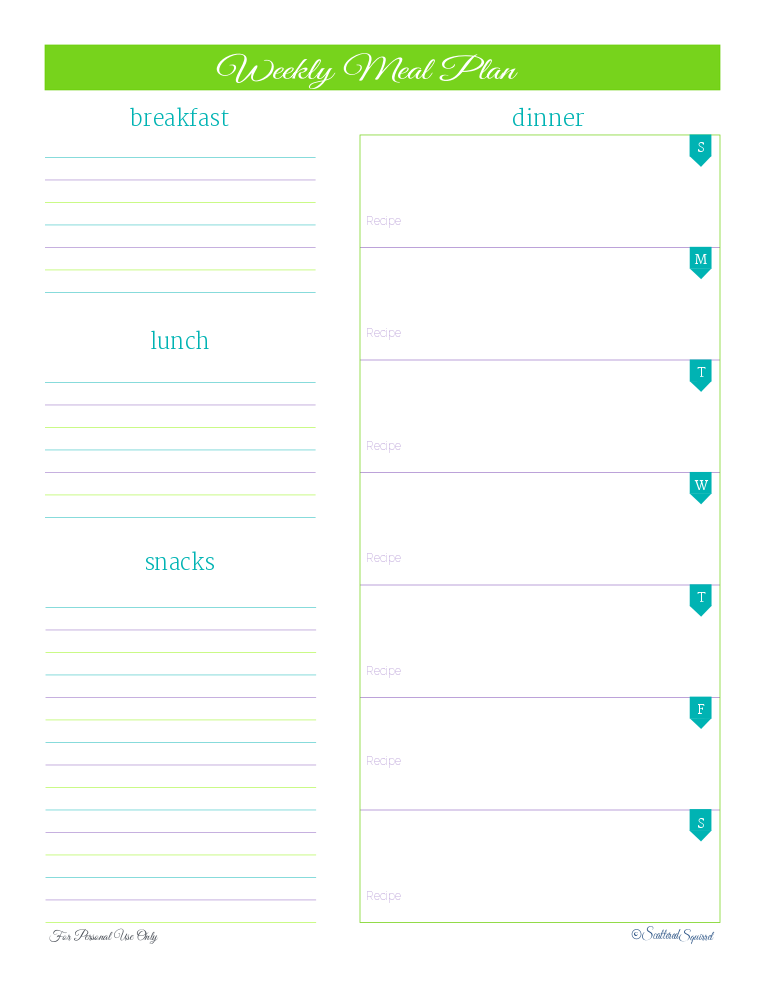

If you’re new to meal planning and not sure where to start, make-ahead meals are a great low-pressure entry point. You can find some helpful printables for that in this post: Make-Ahead Meal Planning Printables to Make Dinner Time Easier
And if you keep your kitchen-related planning separate from your home management binder (which a lot of people do!), you might also want to check out the Kitchen Binder Printables page. It has everything you’d need to set up a dedicated kitchen binder.
Where to Start: The Sections I’ve Never Lived Without
With so many printables to browse through, it can be hard to know where to start. So here’s my honest answer: through every version of my home management binder (including the early days when it was more of a file folder than an actual binder) there are a handful of sections that have always been there.
If you’re not sure where to begin, start here:
Emergency Contacts and Important Accounts. This one has never left my binder. Having that information in one easy-to-access place just brings peace of mind for me and for everyone else in the household.
A cleaning schedule or checklist. My scatter-brained self needs the accountability. Having it written down and visible makes all the difference.
Indoor and Outdoor Home Maintenance lists. These are what keep our home in good order from one season to the next.
A running home projects list. A simple, ongoing list of things that need to be fixed, updated, or dealt with around the house. It keeps the “I keep forgetting to deal with that” tasks from falling through the cracks.
A home needs and wish list. Things that need to be replaced, things we’d love to add someday — like, say, more bookshelves. Having it written down means I’m not trying to remember it all, and it makes those “what should we do with this money?” conversations a lot easier.
Your home management binder doesn’t have to be elaborate or perfect. It just needs to work for you and your family. Start with what you know you need, and build from there.
Looking for more ways to get your home and life organized?
Check out the Home and Life Companion and Home and Life Organized collections. Both are full of resources that work hand-in-hand with your home management binder.
And if you want to take a step back and look at the bigger picture of home management, the Home Management Made Simple page is a great place to start.
Join us over in the Scattered Squirrel Facebook Group! Come hang out, ask questions, share what’s working, and get inspired by what other people are doing with their planning systems.